
Customer Service So Bad, It’s Illegal
The Numbers Are In: Customer Service is Getting Worse
A recent Wall Street Journal investigation confirms what we’ve all been experiencing: 77% of Americans reported having a product or service problem in the past year, the highest rate ever recorded. I suspect the other 23% includes babies and dogs who haven’t figured out how to complete a survey. The 77% is up from 66% just five years ago and more than double the 32% reported in the 1970s.
Even worse than seemingly everyone having an issue with a product or service, 68% of people say trying to resolve these problems requires “high or very high amounts of effort.” This number is up from 65% just two years ago.
Think about the last time you were stuck on hold for an hour to solve a problem that should have taken minutes (or if you have had the displeasure of dealing with a company that doesn’t have a phone number, the last time you had to open a support ticket that gets no reply).
This is not just caused by companies being careless and failing to provide enough resources to consumer service (but that’s definitely part of it); this is enshittification in action, and it’s a deliberate business strategy.
What is Enshittification?
I recently broke this down in a TikTok video, but here’s the short version: Enshittification is when companies make their products or services progressively worse over time, all while extracting more money and data from you.
Here’s how it works in the customer service context:
Phase 1: Companies make it incredibly easy to buy from them. One-click ordering! Subscribe now! Free trial with just your credit card! As the WSJ article points out, “I can order dental floss and it’ll be at my doorstep in 30 minutes.”
Phase 2: Once they have your money, getting help becomes a nightmare. Long hold times. Endless phone trees. Chatbots that can’t actually help. Representatives who “aren’t authorized” to make decisions. And good luck trying to cancel that subscription you signed up for.
Phase 3: They layer on even more obstacles. Return fees. Shorter return windows. AI systems instead of humans. Two-tier customer service where wealthy customers get actual help while everyone else gets stonewalled.

.
The Metrics That Make Everything Worse
One of my favorite movies is Moneyball. It’s not that I’m a huge baseball fan; it’s that there was this problem caused by a bunch of people saying, “This is how we always did this,” and then someone came along to use math and creativity to fundamentally change the game of baseball. I guess corporate America loved that idea too much and now metrics are everywhere—making the world 1% crappier, every day.
When I was a federal enforcement attorney investigating companies for consumer protection violations, I heard companies tout their metrics to us all the time. But really, the numbers that companies use to measure “success” often measure the exact opposite of customer satisfaction.
I’d sit in meetings and hear executives or their lawyers proudly tout numbers like “average call time under one minute” or “95% first-call resolution rate.” Sounds impressive, right? You’d think they’re solving problems lightning-fast.
Then you dig into what’s actually happening.
That “under one minute” average call time? It includes all the calls where representatives just hung up on customers. That 95% resolution rate? It counts every time a rep told someone “this is resolved” and closed the ticket, regardless of whether the problem was actually fixed.
Companies aren’t measuring whether customers were actually helped. They’re measuring things that make management and investors happy:
“Average Handle Time” (AHT): How fast can you get someone off the phone?
- What this supposedly measures: efficiency
- What this actually incentivizes: rushing customers, not solving problems, transferring to someone else, or just hanging up
- Real result: Problems don’t get solved, customers have to call back multiple times
“First Call Resolution” (FCR): Was the issue resolved in one call?
- What this supposedly measures: effectiveness
- What this actually incentivizes: marking tickets as “resolved” even when they’re not, telling customers “it’s fixed” when it’s not, refusing to create follow-up tickets
- Real result: Issues that need escalation never get escalated
“Customer Satisfaction Score” (CSAT): Did the customer rate their experience positively?
- What this supposedly measures: happiness
- What this actually incentivizes: only surveying customers who had simple issues, gaming the survey process, and having reps beg for good scores
- Real result: The customers with the worst experiences never get surveyed because they gave up
And it’s no secret: investors reward this behavior.
When a company announces they’re “reducing average handle time by 30%” or “implementing AI to handle 80% of customer inquiries,” Wall Street sees “reduced labor costs” and “improved efficiency.” The stock price goes up, and everyone gets a little bit richer.
Nobody asks, “But are customers actually getting help?” Shareholders care about profit margins, not about good customer service.
So executives get bonuses for hitting metrics that actually measure how little help they’re providing.
The AI Customer Service Nightmare
One of the most alarming trends is companies replacing human customer service with AI chatbots and then providing no way to reach an actual person. I wrote extensively about this problem in the mortgage industry in my post Robots Took Over My Mortgage Company: Why It’s So Hard to Get Help From a Human.
The WSJ study found that most respondents gave AI chatbots “ambiguous or modestly unfavorable ratings” as tools for resolving complaints. And why wouldn’t they? These bots:
- Can’t make exceptions or use judgment
- Often can’t escalate complex issues
- Trap you in loops with no exit
- Can’t be held accountable when they give wrong information
- Make it nearly impossible to reach a human
But from a company’s perspective, AI chatbots are perfect because they check all the boxes for those metrics executives care about:
- Low average handle time? Check.
- High “resolution” rate? Of course (because the bot marks every interaction as complete).
- Reduced labor costs? Absolutely.
When you’re dealing with something as critical as your mortgage, your credit report, or your bank account, the stakes are too high for robot runarounds. These situations can be life-ruining, and companies are tossing people into a last-gen version of ChatGPT that keeps telling you to put gasoline in your spaghetti.
The 1% is getting 99% of the Customer Service.
Here’s something that should make your blood boil: the WSJ study found that consumers who identified as upper class are nearly twice as satisfied with resolution outcomes compared with those in the middle, working, and lower classes.
Why? Because companies are now stratifying their customer service. If you pay for premium memberships, you get special phone lines and direct access to support. If you’re a regular customer? You get the chatbot, the endless hold music, and the runaround. I had to deal with this the other day with Twilio. Submitting a customer support ticket for an issue with my paid account was free, but if I want to actually talk to someone via chat or on the phone, I need to pay a premium fee.
This is enshittification with a class war twist. Companies are literally creating a two-tier system where rich people get treated like humans, and everyone else gets treated like a problem to be managed.
So What Do We Do About It?
We need a two-pronged approach:
1. Use Existing Laws to Fight Back Now
Consumer protection laws already on the books can address many of these practices. If you’re experiencing:
- Deceptive advertising about service quality
- Unreasonable obstacles to canceling services
- Bait-and-switch tactics
- Unfair fees or practices
You may have legal recourse. Document everything. Keep records of your attempts to get help. Save chat logs, emails, and call records.
And when you document problems, be specific about the metric gaming you’re experiencing:
- “I was transferred 4 times” (not just “bad service”)
- “The rep closed my ticket, but the problem isn’t solved.”
- “I was hung up on twice.”
- “I’ve called 3 times about this same issue.”
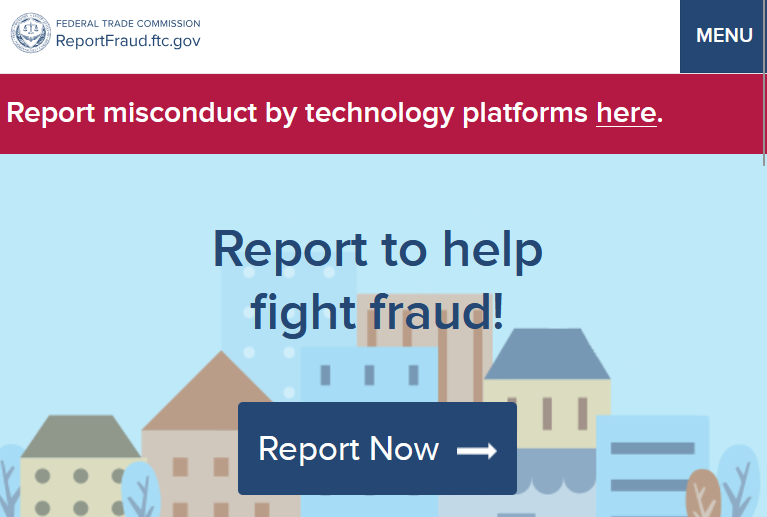
This specific documentation is helpful when you file complaints with the FTC at reportfraud.ftc.gov or with your state attorney general. The more detail you can provide, the better chance regulators have of seeing the patterns.
2. Demand Better Laws for the Future
We need lawmakers to:
- Revive and strengthen the click-to-cancel rule so companies can’t trap you in subscriptions
- Require human customer service options for essential services like housing, utilities, healthcare, and financial services
- Ban AI-only customer service for complex issues or when legal rights are at stake
- Prohibit two-tier customer service systems that discriminate based on how much you spend
- Create real penalties for companies that make customer service deliberately difficult
- Require clear, accessible contact information on all websites and in all contracts
The Bottom Line
Corporate America has figured out that they can make billions by making it easy to take your money and nearly impossible to get help when something goes wrong. They’ve created metrics that look good to investors while hiding how badly they’re treating customers. They’re counting on you being too tired, too busy, or too intimidated to fight back.
But here’s what they’re forgetting: there are a lot more of us than there are of them.
Every time you document bad customer service, every time you file a complaint with your state attorney general, every time you call your representative and demand better consumer protections, you’re pushing back against enshittification.
Yes, the system is rigged. Yes, they have more money and lawyers than you do. But consumer protection laws exist because people fought for them. And we can fight to make them stronger.
Don’t just accept this as the new normal. What we’re experiencing represents a deliberate choice these companies are making. And we can make different choices about what we’re willing to tolerate and what laws we demand.
If you think you might have a legal claim, contact us for a consultation. Sometimes the best way to fight enshittification is to hit them where it hurts: in court.
This post references reporting from the Wall Street Journal article “American Customers Are Madder Than Ever” by Katie Deighton, published November 28, 2025. It also references Corey Doctorow’s new book, Enshittification, which is a must read even though you can’t get it off Amazon (support your local bookstore).